Pi Coding Agent: How Four Tools and 600 Lines Beat the Feature-Rich Competition

Everyone in the AI agent space seems convinced that more built-in features, longer system prompts, and heavier UI frameworks make for a better coding agent—but after digging into Pi's architecture and benchmark results, I'm convinced the opposite is true. Pi runs on just four tools, a system prompt that's barely a few tokens long, and a terminal UI that's roughly 600 lines of code, yet it landed second place on the TerminalBench leaderboard using Claude Opus 4.5 in October 2024. That performance gap between what we assume agents need and what they actually need is staggering, and it completely reframes how I think about building agentic systems. I want to walk you through exactly why this minimalist approach works, what the hard numbers say, and where the real architectural leverage lives in a design that refuses to bloat.

The Four-Tool Philosophy: Why Less Actually Delivers More
Pi runs on exactly four built-in tools: read file, write file, edit file, and bash. I see this not as a limitation, but as a strict architectural boundary drawn after empirical benchmarking. Each tool serves a non-negotiable function in file system interaction and process execution. Read and write handle basic file creation and retrieval. Edit performs precise in-place modifications using Unix diff/patch algorithms under the hood, which gives surgical accuracy without rewriting entire documents. Bash provides the escape hatch for arbitrary command execution. Together, they form the smallest viable surface area for an agent to manipulate a working environment.
Why These Four Tools Cover the Essentials
When I look at what an agent actually needs to do its job, almost every operation collapses into one of these four primitives. Reading configuration files, writing new modules, patching existing code, or running a test suite—these actions represent the full lifecycle of software development. By collapsing the toolset to this quartet, Pi eliminates the cognitive overhead of choosing between overlapping utilities.
- Read and Write: These handle the fundamental create, retrieve, and overwrite operations. Without them, an agent cannot persist output or ingest existing project state.
- Edit: This is where the architecture gets precise. Instead of brute-forcing a full file rewrite for every minor change, the tool leverages Unix diff/patch algorithms to apply surgical, in-place modifications. I get granular control without the risk of collateral formatting damage.
- Bash: This catches every edge case that does not fit neatly into file semantics. Whether I need to run a compiler, query a package manager, or execute a custom script, bash closes the loop on arbitrary process execution.
With these four, I do not need a dedicated "append" gadget or a "replace line" specialist. The primitives compose cleanly into higher-level workflows.
The Intentional Omissions
Where this design gets interesting is not what Pi includes, but what it refuses to bake in. Other agents ship with sub-agents, plan loaders, background bash processors, Model Context Protocol (MCP) support, and to-do managers as core features. Pi strips all of these out of the default installation. The reasoning is architectural, not ascetic. None of these capabilities represent universal requirements. They are workflow-specific conveniences that inflate the attack surface, complicate the context window, and force every user to pay a complexity tax regardless of whether they ever trigger the feature.
Extensions as Opt-In Architecture
Instead of treating advanced features as defaults, Pi positions them as extensions that users adopt only when their specific workflows demand them. I find this approach refreshingly honest about where the industry currently stands. We are still in the "messing around and finding out stage" of agent design—there is no industry consensus on what constitutes an essential agent feature. One team swears by background process managers; another never touches them. By keeping the core cold and hard at four tools, Pi avoids betting the farm on capabilities that might become obsolete once the community settles on standards.
- Workflow relevance over universal bloat: If I do not need MCP support today, I do not have to context-switch around it or debug its integration.
- Future-proofing through omission: By refusing to canonize speculative features into the binary, Pi preserves the freedom to replace or upgrade them via extensions without breaking the core contract.
Shifting the Burden of Proof
The most consequential implication of this minimalism is how it reframes the debate around capability. Pi does not ask the minimalist design to justify why it omitted a sub-agent system or an MCP adapter. Instead, it places the burden of justification squarely on anyone advocating for additional built-in capabilities. The empirical benchmarking results back this up. By proving competitive performance with only read, write, edit, and bash, Pi delivers empirical evidence that simpler architectures can match or even exceed their feature-rich alternatives.
When I look at these results, the message is unambiguous: if you want to add a fifth built-in tool, you need to prove that the existing four cannot handle the task through composition or extension. This changes the dynamics of feature requests entirely. Rather than accumulating cruft to satisfy every hypothetical use case, the core stays lean, and complexity becomes an opt-in proposition. I get exactly the toolkit I need to interact with the file system and execute processes, and nothing more.
TerminalBench Proof: Second Place Without the Kitchen Sink
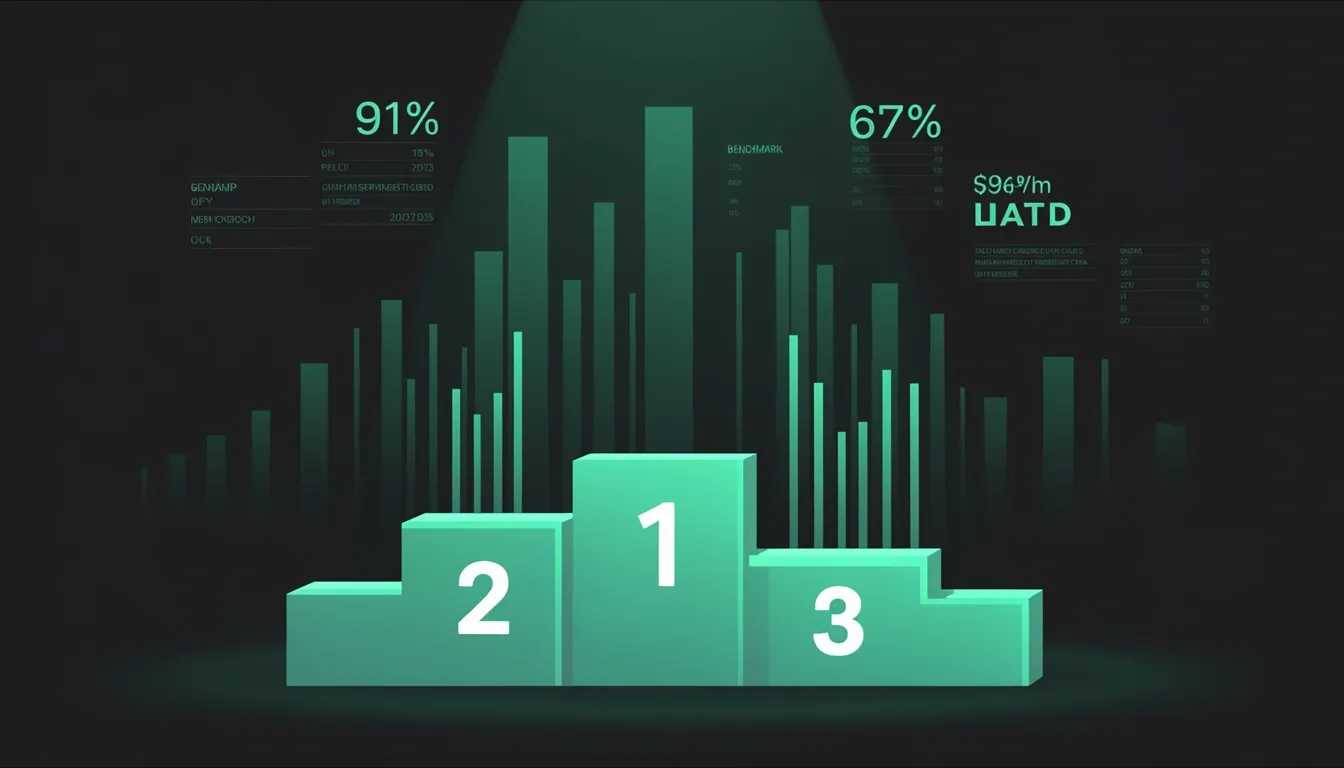
TerminalBench evaluates autonomous agents across approximately 82 diverse computer use and programming tasks, ranging from basic system configuration to complex Monte Carlo simulations. I see Pi's second-place finish on this benchmark in October 2024 as a direct challenge to conventional agent architecture. Running on Claude Opus 4.5, Pi landed immediately behind Terminus on the leaderboard, yet it achieved this result without the extensive feature sets most teams assume are mandatory. What stands out to me is that Terminus operates through extreme minimalism—sending only raw keystrokes to a tmux session and reading back VT code sequences—yet still claimed the top spot. That contrast makes Pi's runner-up position particularly instructive.
The Benchmark Structure and Task Distribution
The TerminalBench suite breaks down into four major categories that test radically different skill sets. System configuration accounts for 25% of the evaluation, covering network setup, package management, and service configuration. These tasks force an agent to navigate a real Unix environment, install dependencies correctly, and bring services online without human intervention. Software development makes up the largest slice at 35%, encompassing bug fixing, feature implementation, refactoring, and test writing. This category demands sustained code reasoning and the ability to modify existing codebases without breaking functionality. Data processing contributes 20%, focusing on log analysis, format transformation, and statistical computations. Finally, computational tasks round out the remaining 20% with algorithm implementation, numerical simulations, and optimization problems—including those complex Monte Carlo simulations that push agents beyond simple script execution into genuine mathematical modeling.
The October 2024 Leaderboard and the Minimalism Paradox
When the October 2024 results were published, the gap between first and second place told an unusual story about tool complexity. Terminus sat at the top despite—or perhaps because of—its stripped-down approach. The agent does not rely on rich APIs or elaborate orchestration layers; it simply transmits raw keystrokes into a tmux session and interprets the VT code sequences that come back. That architecture strips away abstraction overhead and forces the underlying model to do the heavy lifting. Pi landed immediately behind Terminus, which immediately raised questions about whether elaborate scaffolding actually helps or hinders performance on raw technical tasks.
What Pi Refused to Build
I often see engineering teams assume that a competitive coding agent needs every modern convenience layered into its stack. The TerminalBench run proved that assumption wrong. At the time of evaluation, Pi contained no Model Context Protocol (MCP) support, meaning it could not leverage external context providers or standardized tool interfaces. The team had also skipped built-in sub-agent orchestration, so Pi could not spin up helper agents to divide and conquer tasks. There was no plan loading or execution engine, which meant the agent generated and followed its own strategies on the fly rather than executing pre-baked roadmaps.
The omissions continued into execution and workflow management. Pi offered no background bash processing capabilities, so every shell command ran in the foreground and the agent had to wait for completion before proceeding. There was no built-in to-do list or task management system, leaving Pi without a structured queue to track multi-step objectives. Finally, there was no permission gating or approval workflows—the agent operated without human checkpoints and had to own every decision it made.
Performance Without Context Compaction
Perhaps the most technically significant detail is that this benchmark result predates any context compaction strategy in Pi. The October 2024 evaluation used an early version that lacked sophisticated context management. The agent had to work with whatever context window was available, growing the conversation history organically without pruning, summarization, or intelligent truncation. Even under that constraint, Pi performed exceptionally well. That outcome suggests that the quality of the underlying model and the clarity of the agent's core loop matter more than auxiliary systems designed to manage token budgets or organize sub-tasks.
Why This Result Reshapes Agent Architecture
Looking at the numbers, I draw a clear conclusion from Pi's second-place finish. When an agent can place immediately behind Terminus while ignoring the entire modern playbook of agentic tooling, the bottleneck is not the absence of features but the presence of solid reasoning. The benchmark covered network configuration, package installation, bug fixes, refactoring, log parsing, statistical analysis, and Monte Carlo methods—yet none of these required MCP servers, background process managers, or approval gates. Pi's architecture demonstrated that extensive tool sets are not strictly necessary for effective coding agent performance. Sometimes the most powerful design decision is knowing what not to build.
The 600-Line TUI That Renders at Hundreds of FPS
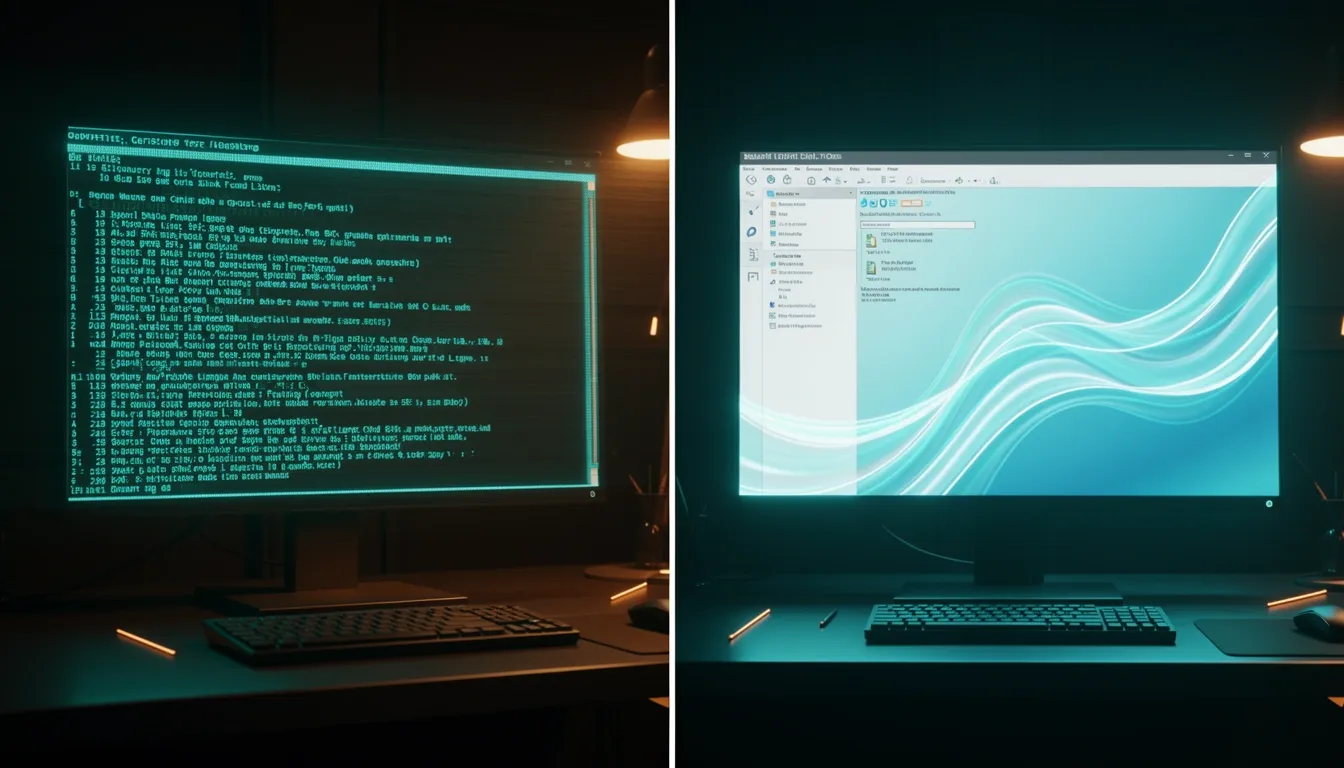
When I examine Pi's terminal user interface, the first thing that strikes me is its footprint: approximately 600 lines of code. This is not a rough prototype or an incomplete implementation that will eventually balloon into thousands of lines. It is a deliberate design choice that directly contrasts with the heavier alternatives currently dominating the agent space. The creator explicitly rejects the architectural complexity of treating terminal interfaces as "game engines," a philosophy that fundamentally shapes how every rendering decision gets made inside those 600 lines.
The Performance Penalty of Heavy Abstractions
To understand why that lean footprint matters so much in practice, I look at what happens inside heavier stacks. Claude Code, for instance, relies on React to drive its terminal interface. That dependency introduces a specific and measurable penalty: more than 12 milliseconds of re-layout delay on every single update. That delay is not merely an abstract benchmark figure. It translates directly into visible flicker and reduced responsiveness that users perceive during normal operation. When I stack that latency against Pi's output, the trade-off becomes obvious. React's virtual DOM abstraction, while powerful inside browser environments, layers in reconciliation overhead that terminal applications simply do not need. Every update forces the system to calculate differences, reconcile trees, and then finally paint, turning what should be an instantaneous text change into a perceptible stutter.
Four Architectural Choices That Eliminate Bottlenecks
Pi achieves its superior rendering performance through a stack of intentional architectural decisions that strip away unnecessary indirection rather than adding more:
- Direct DOM manipulation instead of virtual DOM abstractions. By bypassing the virtual DOM entirely, Pi eliminates reconciliation overhead completely. The application talks straight to the terminal's display model without diffing intermediate trees or maintaining shadow copies of the interface state.
- Selective updates across screen regions. Rather than redrawing the entire interface on every state change, Pi redraws only the regions that actually changed. This surgical approach to rendering preserves CPU cycles and eliminates the visual noise of full-screen refreshes that can distract operators during critical sequences.
- Custom data structures optimized for terminal primitives. The codebase uses efficient data structures built specifically for terminal operations like line insertion, line deletion, and attribute changes. These are not generic arrays or hash maps repurposed from web frameworks; they are tailored to the exact operations a text interface performs most often, which means fewer allocations and faster mutations.
- Minimal abstraction layers. There are fewer indirection points sitting between the agent's logic and the screen output. Every layer removed is a layer that cannot introduce latency, memory pressure, or synchronization bugs. The signal path from decision to pixel is as short as possible.
Together, these choices enable Pi to render at hundreds of frames per second without any flicker, even when the agent is processing dense streams of information.
Why Hundreds of FPS Matters for Agent Debugging
I see the high-fidelity visualization as essential for debugging scenarios where timing and sequence are everything. When an agent executes tools concurrently, race conditions can emerge across milliseconds. An interface that stutters or drops frames can hide those races entirely behind smoothing algorithms or delayed paint cycles. Pi's rendering speed makes it possible to catch problems that slower interfaces would simply blur over:
- Observing race conditions in concurrent tool execution. When multiple tools fire simultaneously, the exact order of output lines can reveal synchronization bugs. A renderer that updates instantly preserves that ordering with frame-perfect accuracy.
- Detecting subtle UI glitches that precede larger failures. Small visual hiccups often signal deeper state corruption or partial updates happening out of sequence. A renderer that updates instantly makes these early warning signs impossible to ignore.
- Monitoring rapid-fire tool sequences during complex operations. Complex agent workflows can issue tools in quick succession. Hundreds of frames per second means every line of output appears exactly when it arrives, not half a beat later.
- Identifying exactly when and how the agent deviates from expected behavior. Timing precision lets me correlate a visual change with a specific logic branch, which is critical when tracing unexpected agent decisions.
Minimalist Codebase, Maximum Capability
What impresses me most is that this 600-line foundation does not sacrifice modern terminal features. The TUI supports a full range of interaction and display modes that many larger frameworks struggle to implement cleanly:
- Full mouse support. Click, scroll, and drag operations all work natively without requiring external input libraries or heavy event translation layers.
- ANSI color and styling. The renderer handles both 256-color and truecolor modes, so gradients, precise color coding, and rich semantic highlighting are available out of the box.
- Customizable themes via CSS-like syntax. Users can style the interface using a familiar declarative syntax rather than programmatic configuration, making visual customization accessible without adding runtime complexity.
- Accessibility features. Screen reader compatibility and high contrast modes are built in from the start, not bolted on as afterthoughts once the core engine is finished.
- Unicode and internationalization support. The terminal layer correctly handles wide characters and mixed scripts without breaking layout calculations or causing misalignment across rows.
- Multiple pane layouts. Split views, tabs, and floating panels are all supported, proving that minimalism and flexibility are not mutually exclusive.
When I step back and look at the complete picture, Pi's TUI demonstrates that raw performance and rich features do not require a massive dependency tree. By refusing to treat the terminal as a game engine and instead respecting it as a precise text display device, the project achieves hundreds of frames per second in roughly 600 lines. That efficiency is not just a technical curiosity; it is a practical advantage that makes the difference between observing a bug in real time and missing it entirely behind a wall of rendering latency.

The Minimal System Prompt: Trusting What Frontier Models Already Know
I find Pi's system prompt architecture genuinely fascinating because it inverts almost every conventional assumption about how to steer a coding agent. Instead of weighing down the context window with hundreds of tokens of behavioral instruction, the entire directive compresses into just a few tokens. This is not an oversight or an unfinished implementation—it is a deliberate structural choice that reflects a sophisticated understanding of how modern frontier models process their task environment. Where competing coding agents often deploy lengthy, instruction-heavy prompts that attempt to micromanage every step of the agentic workflow, Pi treats the system prompt as a minimal framing device. It typically establishes nothing more than basic contextual grounding—something as minimal as identifying the model as a helpful coding assistant—before immediately stepping aside and letting the model's pretrained capabilities take over.
Why Extensive RL Pretraining Changes the Equation
The reasoning behind this minimalism becomes clear once I examine how frontier models are actually built. These systems have already undergone extensive reinforcement learning training specifically for coding agent tasks during their pretraining phase. That means the model has already internalized the fundamental patterns of agentic behavior through RLHF and related alignment techniques long before the system prompt ever reaches its context window.
- Pretrained agentic intuition: The model already knows how to plan, invoke tools, generate code, iterate on debugging loops, and self-correct through RL optimization that was baked into its base training.
- Avoiding conflict with native weights: Rather than attempting to teach the model how to be a coding agent through exhaustive prompt engineering, Pi simply leverages what the model already knows. This avoids the risk of over-specification, where a lengthy prompt tries to overlay a second, contradictory instruction set on top of capabilities that were already hard-won through extensive RL.
- Architectural efficiency: The harness stops fighting the model's native pretraining and instead rides on top of it. I see this as a profound shift in design philosophy: the prompt stops trying to be a substitute for training and instead becomes a sparse pointer to it.
When I compare this to other systems that script out every behavioral nuance in their system prompts, the difference feels stark. Those lengthy prompts do not add capability; they add interference.
The Cognitive Tax of Over-Specification
This brings me to the critical pitfall that Pi manages to sidestep. Over-specification of model behavior in system prompts becomes increasingly counterproductive as frontier models advance. When a system prompt contains detailed instructions that conflict with—or even merely duplicate—the model's pretrained capabilities, it introduces unnecessary tension into the decision-making process.
- Reconciliation overhead: Every token spent on behavioral instruction in the system prompt is a token the model must actively reconcile against its inherent training. The model expends finite cognitive resources resolving potential contradictions between what the prompt demands and what its weights already encode as optimal agentic behavior.
- Suboptimal outputs: That reconciliation process is not free. It can lead directly to suboptimal performance or inconsistent behavior when the prompt's explicit instructions tug in a slightly different direction than the model's pretrained instincts.
- Decision paralysis: I have observed this manifest in other harnesses where the model seems to hesitate between competing directives, producing outputs that feel constrained rather than enabled by their own system prompts.
The problem only worsens as base models grow more capable. A detailed prompt written for last quarter's model might inadvertently conflict with this quarter's improved RLHF tuning, creating a drag on performance that is difficult to diagnose because the prompt itself looks reasonable in isolation.
Contextual Activation vs. Behavioral Control
Pi's brief prompt functions as a lightweight contextual activator rather than a behavioral controller. Instead of dictating detailed behavioral patterns that the model has already internalized through RLHF, it establishes the scene and then trusts the pretrained systems to handle the execution.
- Framing, not dictating: The prompt says, in effect, "You are operating in this coding domain now," and then lets the model's existing training determine the specific behavioral patterns.
- Controller vs. activator: A behavioral controller tries to remotely pilot every maneuver, which works poorly when the underlying vehicle already knows how to drive. A contextual activator merely sets the destination and lets the pretrained systems handle the navigation.
- Preserving model autonomy: By not attempting to dictate detailed behavioral patterns that the model has already internalized, Pi preserves the fluidity of the model's decision-making rather than constraining it with an artificial command layer.
In my view, this is exactly how system prompts should evolve. They should act as sparse framing mechanisms that tell the model which subset of its vast pretrained knowledge to bring to the foreground, not as bloated instruction manuals that try to rewrite that knowledge on the fly.
Betting on Diminishing Returns
What strikes me most about this architecture is that it is built with an explicit eye toward future capability gains. The design assumes that frontier models will continue to improve their general agentic capabilities through ongoing pretraining and reinforcement learning.
- A forward-compatible bet: If that trajectory holds—and everything in the current development landscape suggests it will—then explicit prompt-based instruction for core agent functions will yield diminishing returns over time.
- Static prompts, dynamic models: Investing engineering effort into ever-longer system prompts makes sense only if the model's base capabilities remain static. But they are advancing rapidly. A thousand-token behavioral specification that felt necessary six months ago might become obsolete or even contradictory with the next base model update.
- The shrinking harness: Pi's minimal system prompt is essentially a wager that teaching the model how to be an agent through prompt engineering is a losing proposition compared to relying on the model's native training. The prompt gets smaller as the model gets smarter, which feels like the correct long-term relationship between harness and foundation model.
I would much rather have a few tokens of crisp contextual framing than a massive behavioral specification that forces the model to second-guess its own pretrained instincts. Pi's approach trusts the frontier model to be exactly what it already is: a system that has learned how to act.

The Extension System: Adding Power Without Adding Bloat
I see Pi's extension architecture as a TypeScript-native layer that sits flush against the agent's internals rather than a sandboxed afterthought. Because the entire implementation lives in TypeScript, extensions get deep, first-class access to the agent's mechanisms without bridging languages or wrestling with foreign function interfaces. The architecture centers on four primary interaction points that let external code register tools, expose commands, subscribe to lifecycle events, and render custom interface elements directly inside the terminal user interface.
The Four Core API Interaction Points
The API surface is deliberately narrow but powerful. Each interaction point serves a distinct purpose, and together they cover the full spectrum of behavior modification.
registerTool({ name, description, parameters, execute }): This method injects new capabilities directly into the agent's reasoning loop. When I call it, I provide a string name, a human-readable description, a strict JSONSchema definition for the parameters, and an execute function that houses the actual logic. The description is not just documentation; it feeds into the model's context window, teaching the agent when and why to invoke the tool. The JSONSchema enforces type safety at the boundary, ensuring that arguments passed from the reasoning loop match the shape my code expects. Once registered, the agent can autonomously call this tool during its decision-making cycle without any further user intervention.registerCommand: This adds user-invocable commands accessible via the command palette. Unlike tools, which the agent invokes on its own, commands are actions I trigger explicitly. In the canonical pattern, I pass the command name as the first argument, followed by a configuration object containing the description and the execute function. This distinction matters because it gives me direct control over high-level operations that should not be delegated to the model's discretion.on(event, callback): This event subscription mechanism turns an extension into a real-time telemetry and interception layer. The system exposes lifecycle events such astool_call,tool_result, andmodel_response. By hooking into these, I can observe, log, or even short-circuit the agent's internal chain of thought. It is the foundation for building middleware, audit trails, and reactive debugging tools that respond the moment something happens inside the reasoning loop.Full TUI system access: The fourth point goes beyond logic and into presentation. Extensions can create custom UI components, define themes, and override prompt templates. This means I am not limited to text dumps in a terminal; I can build structured visual outputs that make dense information scannable without leaving the agent's interface.
Anatomy of a Canonical Extension
A canonical extension follows a predictable pattern that keeps setup minimal and intent clear. It exports a default function receiving the pi: ExtensionAPI instance, then composes behavior by chaining registrations and event listeners inside that single entry point.
export default function (pi: ExtensionAPI) {
  pi.registerTool({
    name: "deploy",
    description: "Deploy application to staging environment",
    parameters: { /* JSON schema */ },
    execute: async (args) => { /* deployment logic */ }
  });
  pi.registerCommand("stats", {
    description: "Show session token usage and cost statistics",
    execute: async () => { /* statistics display logic */ }
  });
  pi.on("tool_call", async (event, ctx) => { /* Intercept tool calls */ });
}
I find this pattern effective because it colocates related functionality. In one file, I can define a tool the agent uses autonomously, a command I trigger manually, and an event listener that watches the boundary between them. The pi object acts as a capabilities broker, and because everything is typed in TypeScript, I get autocompletion and compile-time safety across all four interaction points.
Hot Reloading and Iteration Velocity
The /reload command is a genuine force multiplier for extension development. When I modify an extension file inside a project directory, Pi detects the filesystem change and automatically reloads the extension. I do not need to terminate the session, lose context, or wait for a full restart cycle. This zero-downtime iteration cuts development feedback loops from minutes down to seconds. In practice, that means I can tweak a JSONSchema, adjust an execute function, or refine an event handler, hit save, and test the change immediately within the same conversational context. The reduction in friction makes exploratory coding feasible, and it encourages me to treat extensions as living code that evolves alongside the task at hand rather than static plugins I ship and forget.
Self-Modification and the Virtuous Cycle
Because extensions receive full access to the agent's API, Pi can participate in modifying its own capabilities. This creates a powerful self-modification loop where the agent enhances its own transparency and debuggability features. I can task Pi with concrete extension-writing goals that immediately alter its behavior.
- Adding a
/testcommand: I can instruct Pi to build an extension that registers a user-invocable command for running unit tests. Once loaded, that command lives in the palette and executes test suites on demand. - Augmenting the bash tool: I can ask Pi to modify the existing bash tool so that it includes automatic sudo prompting. Instead of failing on permission errors, the tool detects the condition and surfaces an escalation prompt inside the reasoning loop.
- Building real-time token usage UI: I can have Pi construct a UI component that displays live token consumption. Because the extension has TUI access, it can render a persistent panel or inline metric that updates as the session progresses.
These patterns form a virtuous cycle. The more I extend Pi, the more visibility and control I gain over its operations, which in turn makes it easier to identify the next extension worth building.
Real-World Patterns Without Core Modifications
The extension system keeps the core Pi framework untouched while enabling sophisticated add-on behavior. I have seen three especially compelling patterns emerge from this boundary.
Custom logging extensions: By subscribing to
tool_callandtool_resultevents, I can trace exact execution paths through the agent's reasoning graph. Every invocation, argument payload, and return value gets logged to an external sink or rendered in a sidebar, giving me a step-by-step audit of how a conclusion was reached.Visualization extensions: Using the TUI hooks, I can map decision trees as they form. When the agent evaluates multiple tools or branches across reasoning steps, the extension renders a live tree view that makes the logic tangible rather than opaque.
Audit and compliance extensions: For environments that require tamper-evident records, I can build an extension that cryptographically signs session histories. By intercepting events and hashing the sequence of tool calls and model responses, the extension generates verifiable proofs of exactly what happened during a session, all without ever requesting a change to the core framework.
This architecture proves that deep integration does not require deep coupling. By exposing the reasoning loop, command palette, lifecycle events, and terminal interface through a TypeScript-native API, Pi lets me add substantial power while keeping the core lean, hot-reloadable, and under my complete control.
Dual-Mode Architecture and 15+ Provider Flexibility
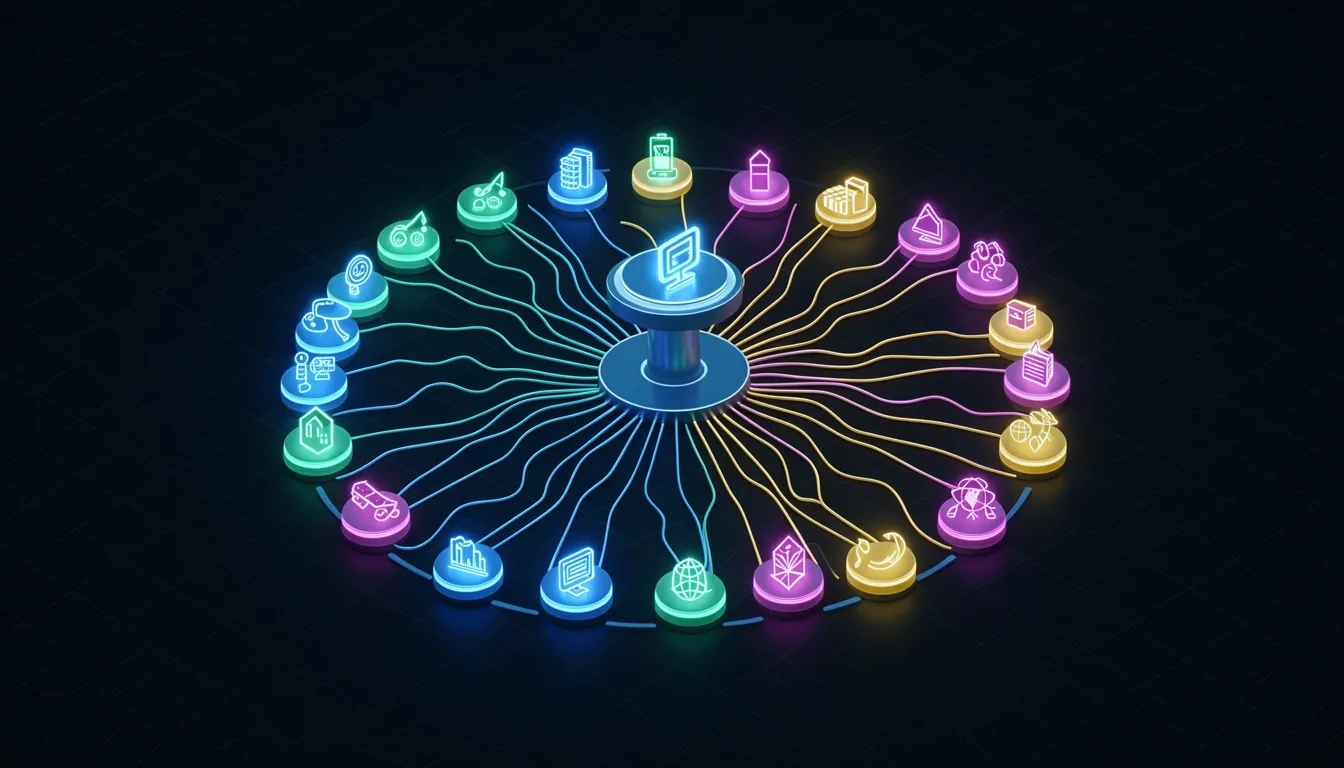
I look at Pi's architecture as a deliberate exercise in surgical separation. The entire system is organized around four distinct core packages, each carrying a narrowly defined responsibility. This is not accidental complexity; it is a minimalist foundation that stays extensible because no single package tries to own the whole pipeline.
The AI Package as a Universal Abstraction Layer
The first package I want to examine is the AI layer. It functions as a pure abstraction barrier between the agent's reasoning logic and the outside world of large language models. Instead of hard-coding assumptions about how a model should be reached, this package normalizes across different transport protocols so the rest of the system does not need to care about the underlying wire format.
Key responsibilities include:
- Transport normalization: The package handles HTTP, WebSocket, and other transport protocols uniformly.
- Authentication flexibility: It supports both API keys and OAuth flows, accommodating corporate identity pipelines and simple developer tokens without forcing either model onto the other.
- Provider breadth: The abstraction unifies 15 or more distinct backends, including Anthropic, OpenAI, Google, Azure, Bedrock, Mistral, Groq, Cerebras, xAI, Hugging Face, Kimi For Coding, MiniMax, OpenRouter, and Ollama.
The practical impact is that I can switch between models mid-session without touching framework code. If I start a task with one provider and realize I need a different model's capabilities halfway through, the abstraction absorbs the change. No framework modifications are required.
The Agent Core and Its Deterministic Loop
The second critical package is the agent core. This is where the generalized agent loop lives, and it is the heartbeat of the entire interaction model. The loop follows a strict cycle:
- Receive user input and interpret the current context.
- Invoke appropriate tools based on that context and whatever extensions are currently loaded.
- Verify tool execution results before accepting them as ground truth.
- Determine the next action and continue the cycle.
I find the determinism here especially valuable. The loop is designed to be deterministic and observable, which means I can trace exactly why the agent chose a particular tool at a particular moment. There are clear entry and exit points specifically intended for extension interception. If I need to inject custom logic—maybe to log decisions, enforce policies, or modify parameters—the architecture has already carved out the hooks. I do not have to monkey-patch internals; I can intercept behavior at well-defined boundaries.
Dual-Mode Operation: TUI and SDK
The coding agent itself operates in two distinct modes that share identical core logic. The first mode is a full-featured TUI coding agent meant for interactive terminal use. This is the experience most developers see first: a text-based interface where I can iterate on code in real time.
The second mode is a software development kit for headless operation. Here, the same core logic that drives the interactive terminal is exposed for programmatic integrations. I can reach it through two primary paths:
- RPC mode: A JSON protocol spoken over stdin/stdout, perfect for piping the agent into existing automation.
- Direct SDK embedding: For when I want to call the agent as a library from within another application.
The OpenClaw integration serves as the real-world demonstration of this pattern, showing how the agent can be dropped into an external workflow without the TUI layer getting in the way.
Why the Architectural Separation Matters
What ties these packages together is a strict boundary that keeps the core agent logic identical across both interaction modes. Whether I am typing into a terminal or piping JSON from another process, the underlying reasoning, tool selection, and verification steps remain the same. The consistency protects me from subtle behavioral drift between interactive and programmatic use.
At the same time, the separation allows specialized optimizations for each use case. The TUI path can optimize for latency and rendering, while the SDK path can optimize for throughput and serialization, all without corrupting the shared logic in the middle. That balance—one core, many interfaces—is what makes the architecture genuinely flexible rather than merely configurable.
Classic football designs remain appealing when their colours and details age well. Supporters looking at third-shirt colours can use Manchester City jersey(camiseta del Manchester City) as the exact subject of comparison. Historic context often adds meaning to colours, badges and shirt patterns.