Cline Review: The Open-Source Coding Agent That Outscored Claude Code
I've spent weeks running Cline through its paces across real projects, and I keep coming back to one number: 74.2%. That's the score Cline's CLI hit on Terminal Benchmark 2.0 using claude-opus-4.7—beating Anthropic's own Claude Code at 69.4% on the same model. For an open-source tool serving over 1 million developers with 4 million installations, that kind of performance isn't a fluke. But raw benchmark numbers only tell part of the story. Cline's human-in-the-loop approval system, multi-agent orchestration, and BYOI pricing model make it genuinely different from the growing crowd of AI coding assistants. Still, it has real trade-offs around MCP complexity, ecosystem maturity, and the inherent overhead of its extensibility architecture. Let me walk you through everything I've found—the good, the frustrating, and the surprisingly impressive.
What Cline Actually Is (And How It Differs From Other Coding Agents)
I see Cline as a fundamentally different breed of coding assistant. Instead of chasing full autonomy, it embeds itself directly into the IDE through VS Code and JetBrains extensions, a standalone CLI, and even a Kanban product, serving more than 1 million developers across over 4 million installations. Trusted by Samsung, Salesforce, Oracle, Amazon, LG, Globant, Microsoft, eBay, Visa, and IBM, it clearly has enterprise-grade traction. Yet its real distinction is not its install base; it is the strict human-in-the-loop (HITL) paradigm that forces every proposed action through an explicit approval gate.
The HITL Safety Architecture
What separates Cline from agents that silently rewrite your codebase is its refusal to execute anything without consent.
- Explicit approval gates: Every proposed file edit and terminal command halts until I explicitly approve it. Nothing runs in the background while I am not looking.
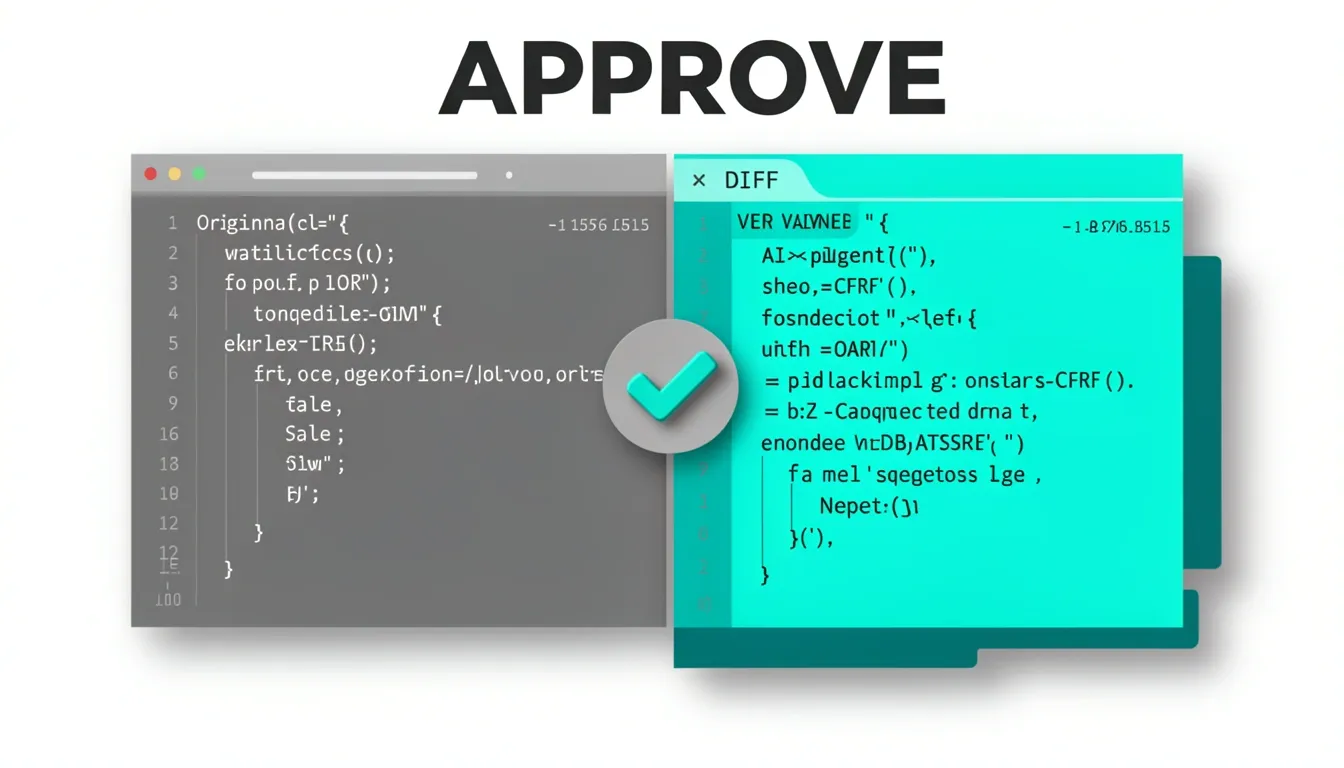
- Visual diffing: File modifications render as side-by-side diff views complete with syntax highlighting and line numbers, so I can inspect exactly what changed before I click yes.
- Command transparency: Terminal commands are displayed in full before execution. I see the raw command string, not a sanitized summary.
- Immutable audit trail: All actions are logged locally, creating a traceable history of every change and command issued during the session.
- Checkpoint rollback: After each approved step, the workspace snapshots automatically. If a change breaks something, I hit Compare to diff the current state against any prior checkpoint, or Restore to roll back instantly.
Context Engineering Without Context Window Bloat
Cline does not brute-force entire codebases into the prompt. Instead, it reads project structures by mapping file dependencies, import graphs, and abstract syntax trees (ASTs). It uses selective file reading and regex searches to build a working mental model of the project while deliberately avoiding the common trap of overwhelming the model's context window. To me, this feels like the difference between a junior developer who reads every line and a senior who knows exactly which files matter.
Continuous Monitoring and Runtime Feedback Loops
Where Cline starts to blur the line toward autonomy is in its persistent monitoring layer. It continuously watches for linter and compiler errors—missing imports, type mismatches, syntax errors—and automatically proposes fixes before I even notice the red squiggles. It can execute commands like npm run dev, read the resulting server logs, and react to what it sees. The headless browser integration is particularly interesting: Cline observes runtime errors and visual bugs in the rendered output, then loops back to patch the code based on actual rendered behavior rather than static analysis alone.
To me, this architecture makes Cline less of a replacement for the developer and more of a high-skill pair programmer that refuses to touch the keyboard without permission. It combines deep code comprehension with strict operational guardrails, which explains why enterprise teams trust it with production codebases.
The Four-Layer SDK Architecture Powering Cline
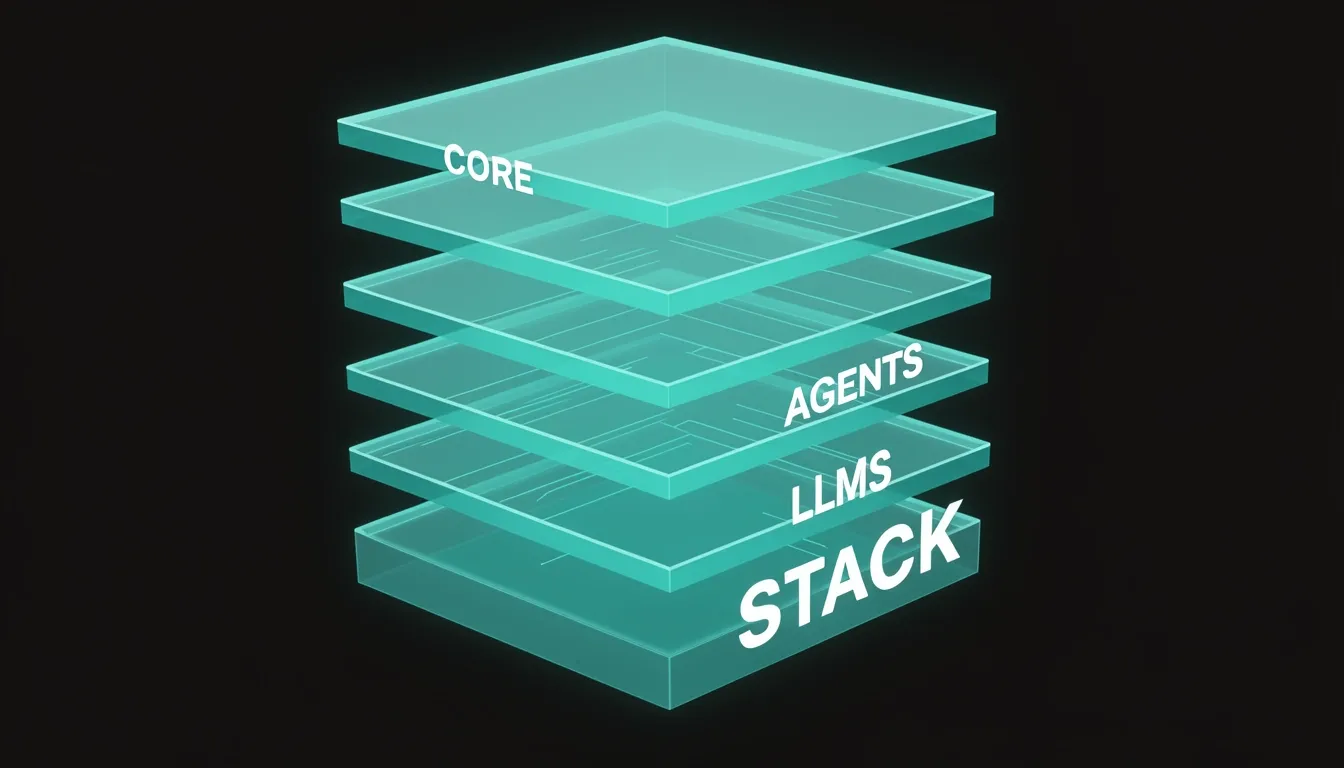
When Cline extracted its internal agent harness into the open-source @cline/sdk, it effectively turned its product into a programmable platform. The SDK ships via npm install @cline/sdk and carries a hard dependency on Node.js 22+, which tells me the team prioritized modern runtime features over legacy compatibility. This is not a thin wrapper around HTTP endpoints; it is the same TypeScript runtime that powers Cline's own interfaces, rebuilt as a composable four-layer stack.
Deconstructing the Four-Layer Stack
The architecture divides responsibilities across four scoped packages. I appreciate this granularity because it lets developers import only the layers they need instead of dragging in an entire monolithic engine.
@cline/shared: Houses shared utilities and base types. This acts as the contract layer, ensuring type safety and common interfaces across the ecosystem.@cline/llms: The LLM abstraction layer. By decoupling model inference from orchestration logic, this layer lets you swap providers or point to custom endpoints without rewriting agent behavior.@cline/agents: Contains the agent orchestration primitives. This is where tool-calling loops, state transitions, and inter-agent messaging are defined.@cline/core: The core runtime engine. It executes the agent graph, manages the event loop, and coordinates lower-level systems like sandboxing and session persistence.
This separation matters because a developer building a lightweight automation script can cherry-pick @cline/llms and @cline/agents, while a team building a full IDE extension can pull in @cline/core for the complete runtime. To me, this modularity signals that the SDK was designed for embedding, not just for CLI scripting.
Production Primitives Out of the Box
What distinguishes this from a basic client library is the native support for production-grade primitives. The runtime includes plugins, subagents, CRON scheduling, checkpointing, and MCP (Model Context Protocol) connectors baked directly into the stack. I see checkpointing as particularly vital for long-running workflows—if an agent crashes during a multi-step task, it can resume from the last known good state rather than restarting from scratch. CRON scheduling lets you deploy persistent agents that wake up and execute logic on a timer, while the MCP connectors standardize how the agent consumes external context sources. That keeps the integration surface clean and predictable.
Real-World Adoption and Migration
The SDK is already powering Cline's CLI and Kanban products, and the VS Code and JetBrains extensions are being migrated onto it. That level of internal dogfooding suggests the API surface is stable enough for real workloads. Because the engine is embeddable, you can integrate it into custom applications that require persistent sessions and isolated sandboxes. The multi-agent orchestration support means you are not limited to a single agent thread; you can spin up specialized subagents for distinct tasks and let the core runtime coordinate them without manual process management.
Programmatic Control Over Tools and Lifecycle
The SDK exposes a programmatic interface for registering tools and lifecycle hooks. For example, you can define a deployTool that accepts an environment parameter, encapsulates your deployment logic, and then pass that tool directly into an Agent instance alongside other utilities. This model treats tools as first-class, typed functions rather than string-parsed commands, which makes the agent's behavior deterministic and testable. When I look at this API design, it is clear the team optimized for developers who need to embed a production-grade agent runtime into existing backends or automation pipelines without surrendering architectural control.
Performance Benchmarks: P99 Latency, Error Rates, and Terminal Bench 2.0
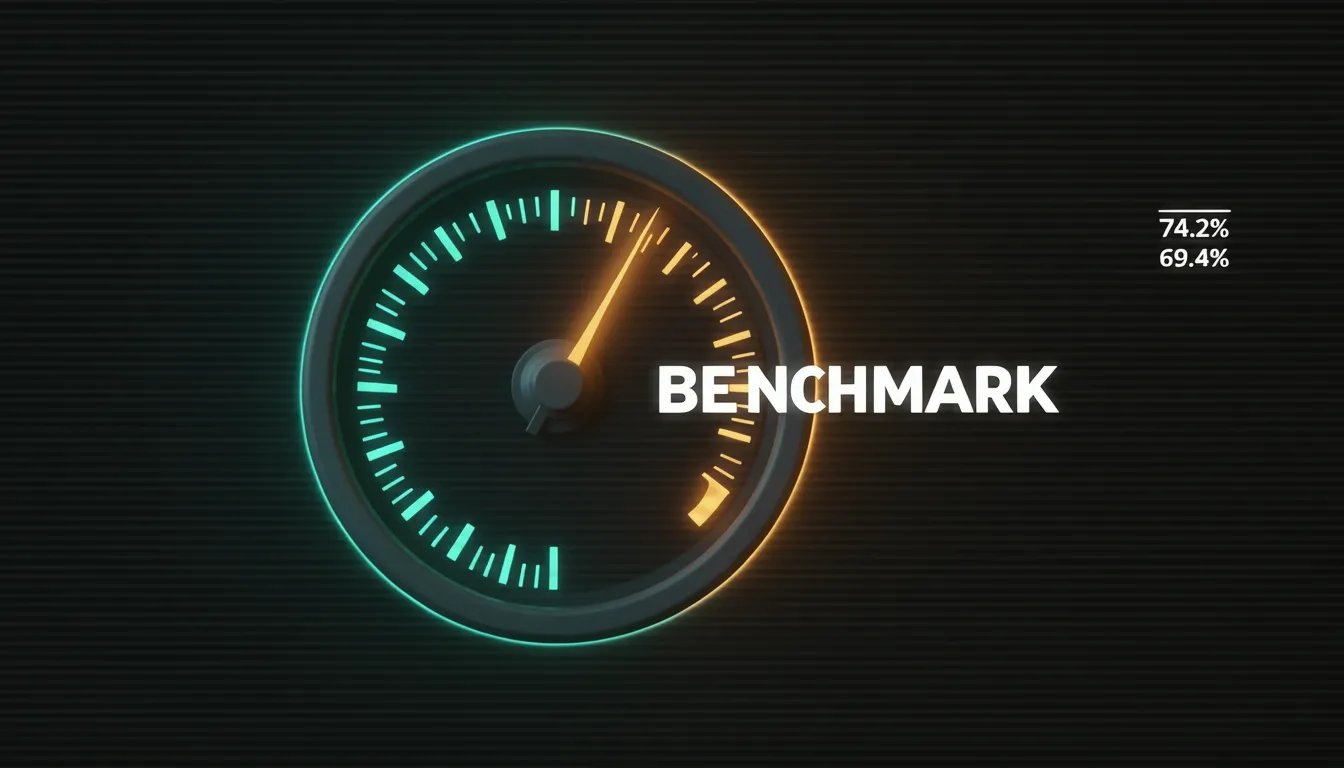
When I look at the Terminal Benchmark 2.0 results, the gap between Cline CLI and Claude Code jumps out immediately. Both tools run on the exact same model—claude-opus-4.7—yet Cline CLI scores 74.2% while Anthropic's own Claude Code sits at 69.4%. That is a 4.8 percentage point spread, and to me, that difference is purely about agent runtime architecture. The base model is identical; the prompt engineering, tool-calling loops, and context management are not. This tells me that how you wrap the model matters just as much as the model itself, especially when the benchmark is designed to test end-to-end coding capability rather than raw LLM trivia.
What the Terminal Benchmark Reveals About Architecture
- Identical model, different outcomes: Since both agents use claude-opus-4.7, the 4.8-point lift has to come from Cline's execution layer—how it plans edits, invokes tools, and recovers from failures.
- Runtime independence: I see this as concrete proof that coding agent performance is not just a function of LLM capacity. The scaffolding around the model—token streaming, context window management, and retry logic—directly pushes the accuracy needle.
- End-to-end vs. raw inference: Terminal Bench 2.0 measures the full loop: reading files, proposing changes, executing commands, and verifying output. A higher score here means Cline's orchestration wastes fewer tokens and makes fewer wrong turns.
The benchmark numbers are clean, but production traffic is messy. After routing Cline through the Vercel AI Gateway, the team ran a week-long live A/B test on real user traffic. The results were immediate and measurable.
Production A/B Test: Latency and Reliability Gains
- P99 streaming latency dropped 10–14% across Cline's most-used models. I find this significant because the slowest 1% of requests are exactly when an agent stalls mid-thought—those painful pauses between reasoning steps that make you wonder if the process died.
- API error rates fell by 43.8%. Fewer broken generations means fewer manual retries, and in my experience, that is what makes an agent feel like it "just works" during long sessions. When I am running a multi-step refactor, a 43.8% reduction in dropped requests is the difference between walking away for coffee and staying in the zone.
Why the Long Tail Defines the Experience
I have noticed that coding agents do not feel slow because of average response time; they feel slow when they hang. Those P99 moments—when the model pauses mid-stream or the connection hiccups—break flow state. By shaving 10–14% off that worst-case latency, Cline removes the stalls that interrupt multi-step reasoning chains. The 43.8% drop in errors compounds this: smoother token streaming plus fewer dropped requests means the agent maintains momentum through complex, multi-file edits. When the post argues that coding-agent speed is dominated by worst moments, I agree completely. The long tail is not a statistical curiosity; it is the primary driver of perceived responsiveness. A tool that keeps the 99th percentile in check simply feels faster, even if the median barely moves.
To me, the takeaway is clear. Raw model intelligence gets you to the baseline, but the runtime architecture—gateway routing, streaming stability, and error resilience—is what separates a tool that scores higher on paper from one that actually feels responsive when you are deep in a debugging session.
The Pros: Where Cline Genuinely Shines
When I inspect Cline's stack, the open-source transparency is immediately visible across every layer. The VS Code extension, CLI, secure client-side architecture, MCP marketplace, and multi-root workspace support are all openly accessible, matching the same open-standards philosophy I respect in the Vercel AI Gateway. I can trace exactly how the agent processes my prompts, which is essential when I need to debug an unexpected refactor. The pricing model reinforces that openness. Cline charges strictly for AI inference consumed—there are no subscriptions, seat fees, or vendor lock-in traps. The open-source extension remains free forever, and I supply my own API keys from OpenAI, Anthropic, or Google. Alternatively, I can use Cline's built-in provider at cost. The company only generates revenue from enterprise governance features, not from inflating my AI usage bills.
Infrastructure Freedom with Zero Markup
Cline's BYOI (Bring Your Own Inference) model removes the middleman tax I typically associate with AI coding tools.
- Direct cloud integration: I can pipe Cline straight into AWS Bedrock, Google Vertex AI, Azure OpenAI, Anthropic, OpenAI, Cerebras, or any OpenAI-compatible endpoint.
- Existing credits and rates: The setup consumes my existing cloud credits and negotiated enterprise rates, with zero markup from Cline.
- Instant model switching: I can bounce between Claude Sonnet 4.5 for daily maintenance and GPT-5 for heavy refactoring without rebuilding the environment or rotating API credentials.
That flexibility keeps my infrastructure spend inside my existing cloud relationships rather than adding a new billing layer I have to justify to finance.
Human-in-the-Loop Safety and Immutable Auditability
On the security front, Cline enforces explicit human approval for every edit and terminal command. I do not have to worry about the agent silently rewriting my configuration files or executing a destructive shell script.
- Explicit approvals: Every file edit and terminal command halts for my go-ahead.
- Side-by-side diffs: I review changes in a split diff view before they hit disk.
- Checkpoint snapshots and audit trails: The system captures immutable logs and rollback points, so when a migration goes sideways, I can trace exactly which prompt triggered the damage.
In regulated environments, that paper trail is a practical requirement, not a nice-to-have.
Multi-Agent Teams and Scheduled Automation
Where Cline shifts from a single assistant to a production system is its multi-agent team support.
- Coordinator delegation: I run
cline --team-name auth-sprint "Plan and implement user authentication with tests"and watch a coordinator agent shard the work across specialist agents. - Persistent state: Session state survives reboots, so specialists retain context across days.
- Cron-based scheduling: Recurring jobs like
cline schedule create "PR summary" --cron "0 9 * * MON-FRI"run autonomously without me babysitting the terminal. - JSON output: Results serialize to JSON for easy ingestion into CI/CD pipelines or custom dashboards.
The performance gap on Terminal Benchmark 2.0 is what solidified my view that agent runtime architecture deserves equal billing with the underlying model. Cline scored 74.2% while Claude Code managed 69.4% on identical models. To me, that margin indicates superior prompt engineering, tool-use loops, and context management inside Cline's runtime. It proves that how an agent plans, executes, and recovers from errors can outweigh raw model capability alone.

The Cons: Real Trade-offs You Need to Know About
I noticed immediately that the MCP ecosystem suffers from severe fragmentation that undermines its practical utility. Servers are scattered across numerous registries, random repositories, and buried deep inside community threads. There is no single canonical place to check for available servers, which makes discovery painfully slow and full of friction. Server creators are visibly worn out from publishing to multiple places and answering the same setup questions repeatedly. The fractured environment introduces tangible security risks: without a centralized, vetted registry, developers may encounter unverified or malicious MCP servers that could compromise their local environment or expose sensitive codebase information.
Opaque Authority and Missing Guardrails
Beyond discovery, the protocol's design raises serious concerns about control and transparency. MCP follows an authoritative approach where the model is given full access to the external world. I see no robust checks and balances to prevent the model from performing unexpected actions. Consider the risks:
- Unintended data loss: The model could accidentally delete rows from a production database or overwrite critical configuration files without a client-side veto.
- Contrast with function calling: In traditional function calling, the model can only suggest invoking functions, and the client retains the final decision on whether to execute them. That client-side gating is a critical safety mechanism that MCP effectively bypasses.
Infrastructure and Compatibility Burden
The operational overhead is equally significant. An MCP server runs as a separate entity that must be maintained and monitored, operating as a distinct process from the main program. This creates concrete deployment challenges:
- Container sprawl: If the main program runs inside a Docker container, the MCP server requires its own separate container, which becomes genuinely problematic in resource-constrained environments where every megabyte of RAM and CPU cycle counts.
- Protocol lock-in: An MCP server can only communicate with clients that explicitly implement the MCP protocol, limiting flexibility compared to function calling, which relies on standard HTTP API patterns that virtually every modern stack already understands and supports natively.
Migration Gaps and Workflow Friction
On the tooling front, the migration to the new @cline/sdk is still incomplete. Both the VS Code and JetBrains extensions are actively being migrated, meaning the IDE experience may not yet fully reflect the four-layer architecture's promised capabilities. I expect this gap to close in subsequent releases, but right now users are working with a partially realized integration layer that can produce inconsistent behavior between the core agent and the extension UI.
Finally, the human-in-the-loop paradigm, while safer by design, creates noticeable friction for power users. Experienced developers who want more autonomous operation for well-understood tasks—such as refactoring a familiar module or regenerating boilerplate tests—will find the approval prompts slow them down. The safety guardrails that protect beginners can feel like unnecessary handcuffs to senior engineers running routine operations, creating a tension between security and velocity that Cline has not yet fully resolved.
MCP Extensibility: Cline's Greatest Strength and Weakest Link
Cline’s extensibility model hinges on the Model Context Protocol (MCP) and a programmable plugin layer that, in my view, represents the most interesting architectural bet the project has made. Rather than treating the agent as a monolithic black box, the system exposes a structured interface where external capabilities are first-class citizens. I see this as a fundamental shift from hard-coded integrations to an open tool bus.
Transport Architecture: STDIO vs. Remote HTTP/SSE
At the core of MCP are two transport mechanisms that cover radically different deployment scenarios. STDIO keeps everything local: the agent spawns a child process and pipes data through stdin/stdout. I notice this path offers the lowest latency and the simplest initial setup, requiring only a command and args field in the configuration. For distributed or enterprise environments, Remote HTTP/SSE moves the endpoint onto the network. Here, the url field and optional headers define the connection, enabling centralized deployment where multiple clients can hit the same hosted toolset. Both transports support environment variable injection through the env field, which keeps secrets out of shell history and config files. The autoApprove array is another sharp detail: it lets specific tools run without blocking the user for confirmation, which matters when you are iterating quickly and trust the underlying server.
Developer Experience and Tool Orchestration
What strikes me is how deeply the SDK and CLI are integrated. Developers register tools and lifecycle hooks programmatically via @cline/sdk, but day-to-day management happens through the terminal. The cline mcp command opens an interactive server management interface, while cline config mcp and cline config mcp --json give you non-interactive, scriptable access to the same state. That duality—interactive for humans, JSON for automation—is exactly what I want in a dev tool.
Server lifecycle controls are granular. You can enable or disable servers individually, restart unresponsive ones, tune request timeouts, or remove servers entirely. But the standout feature is natural-language tool generation. When I tell Cline to “add a tool that fetches Jira tickets” or “manage AWS EC2s,” the agent scaffolds the MCP server, installs it, and registers it. Those custom tools immediately become part of the agent’s working toolkit, callable through plain English. The plugin system also opens the door to logging, auditing, policy enforcement, and integrations with Slack or Telegram. For multi-agent workflows, different agents can carry different tool belts for specific subtasks, which turns a single chat window into a coordinated team.
Where the Ecosystem Becomes a Liability
Despite the protocol’s elegance, I see serious structural problems in the surrounding ecosystem. Distribution is scattered, discovery is painful, and creator fatigue is real. There is no centralized, vetted registry, which means every MCP server you install is essentially unverified third-party code. That risk gets amplified by autoApprove: the same feature that removes friction also removes guardrails. Without a trusted marketplace, teams must audit servers manually or isolate them in restricted environments. In my assessment, MCP is Cline’s greatest technical strength because it decouples capability from the core agent, but the lack of a secure distribution layer is the weakest link. Until that gap closes, extensibility and security will remain in tension.
Enterprise Readiness: Security, Governance, and Observability
When evaluating Cline Enterprise, I immediately notice that the architecture is built around a simple but rare premise: the enterprise layer sells governance, not compute. The platform delivers five core capabilities that address the typical friction points when rolling out AI coding assistants across regulated environments. The most fundamental is Security by Design—all processing happens client-side, meaning no source code, context windows, or repository metadata ever leaves the local environment. This eliminates the risks of data exfiltration, unauthorized codebase indexing, and model training on proprietary user data. For organizations with strict IP policies or air-gapped networks, this is a hard requirement that many hosted alternatives simply cannot meet.
Inference Independence and BYOI
Cline Enterprise treats inference as infrastructure the customer already owns, not as a rental service.
- Zero-markup BYOI: The platform connects directly to approved inference providers—AWS Bedrock, Google Vertex AI, Azure OpenAI, Anthropic direct, OpenAI direct, Cerebras, or any OpenAI-compatible endpoint. Teams use existing cloud credits and negotiated enterprise rates with no markup from Cline.
- Instant model switching: Because the gateway is transparent, platform teams can shift workloads between models without reconfiguring individual developer environments. I see this as a critical hedge against vendor lock-in and sudden model deprecation.
Governance at Scale
Administrative control is centralized and intentionally blunt to prevent policy drift.
- SSO integration: Authentication flows through corporate identity providers, so credentials remain managed within existing IdP lifecycle policies.
- Three-tier RBAC: The hierarchy is strictly Member, Admin, and Owner. This keeps permissioning simple enough to avoid misconfiguration while still separating day-to-day usage from policy management.
- Remote policy enforcement: Platform teams can lock down specific models or tool integrations per team and push these restrictions from a central dashboard without touching individual machines.
Observability and Cost Control
Visibility is treated as a first-class concern rather than an afterthought.
- OpenTelemetry export: Cline Enterprise natively exports telemetry to Datadog, Grafana, and Splunk, so it slots into existing observability stacks rather than forcing a new pane of glass.
- Real-time analytics: Adoption metrics and performance data are available live, but the more valuable signal is the cost breakdown that shows exact spend per team and per model.
- JSON output: Raw consumption data can be piped into custom dashboards, making it straightforward to attribute token spend to specific business units or refactoring initiatives.
Deployment follows a logical sequence: infrastructure teams configure Cline Core against internal systems, define SSO, RBAC, and governance policies, then distribute the client through existing software channels like MDM or internal repositories. Monitoring is handled by the same observability tools already running in the environment. On the commercial side, the enterprise bundle covers SSO, SLA, dedicated support, centralized billing, RBAC, team management dashboards, authentication logs, and advanced configuration management, with fine-grained permissioning marked as coming soon.
What stands out to me is the explicit rejection of the "subscription trap." Most coding-agent vendors monetize inference directly, which creates a perverse incentive to restrict power users or obfuscate token costs. Cline inverts this: revenue comes from governance features, while inference runs at cost through the customer’s own provider agreements. This structure delivers genuine cost predictability during large-scale refactoring projects, where token consumption can spike unpredictably. By decoupling governance pricing from usage volume, Cline Enterprise removes the penalty for actually using the tool.

Final Verdict: Who Should Use Cline and Who Should Wait
When I look at the full picture, Cline is not trying to be a drop-in replacement for every coding assistant on the market. It is deliberately built for a specific profile: developers and teams who refuse to hand over control to a black-box vendor. The pure usage-based pricing with BYOI—bring your own inference—immediately kills subscription traps and vendor lock-in. For me, that alone makes it stand out, because you only pay for the tokens you consume, not a flat monthly fee that penalizes light usage.
The human-in-the-loop architecture is another decisive factor. I notice that Cline forces an approval gate before destructive actions, which makes it genuinely viable for regulated environments where deterministic execution and full rollback capability are non-negotiable. You cannot accidentally nuke a production database if the agent pauses for your explicit sign-off. That safety model transforms Cline from a convenience tool into an auditable automation platform.
Performance is not theoretical here. The 74.2% Terminal Benchmark 2.0 score tells me the agent runtime architecture is doing something right—outscoring even Anthropic's own Claude Code harness. That metric matters because it proves open-source iteration can surpass first-party integration when the runtime is optimized for agentic execution rather than chat completion.
Beyond single-user interaction, I see multi-agent teams and scheduled agents pushing Cline into platform territory. This is not just an interactive chat window; it is a programmable automation backbone. The open-source @cline/sdk with its four-layer architecture gives developers surgical control over how agents behave, which makes it attractive if you need deep extensibility rather than pre-baked workflows.
Who Benefits Most Right Now
- Regulated teams: The HITL model and full rollback capability provide the audit trail that finance, healthcare, and government workflows demand.
- Cost-sensitive developers: BYOI means zero platform markup. If you already manage API keys, your marginal cost is strictly inference.
- Automation engineers: Multi-agent orchestration and scheduled runs let you treat Cline as a CI/CD participant, not a glorified autocomplete.
The Friction You Cannot Ignore
I have to be honest about the MCP ecosystem. Right now, it is fragmented, and the security model around MCP servers still raises eyebrows. If your organization is already standardized on function-calling patterns, MCP introduces genuine friction: separate containers, protocol compatibility headaches, and a layer of opaqueness that makes debugging harder. I also notice that the IDE extensions for VS Code and JetBrains are still migrating to the new SDK, so some features feel half-baked compared to the core runtime.
Who Should Wait
Teams craving fully autonomous operation will chafe against the HITL approval gates. If your workflow depends on agents running unsupervised at 2 AM without human checkpoints, Cline’s safety-first design feels restrictive rather than protective. Likewise, enterprises that expect turnkey governance might find the open-source tier too raw; though I should note the enterprise tier does deliver SSO, observability, and governance without marking up inference costs, which is a fair compromise if you are ready to pay for seat management.
Third shirts often give designers more freedom with patterns and contrasting details. For supporters planning a gift, FC Barcelona jersey(camiseta del FC Barcelona) gives a precise starting point for the intended team. Supporters can compare current and classic versions without losing sight of team identity.
For the individual developer comfortable spinning up MCP servers and juggling API keys, Cline offers flexibility that proprietary platforms simply cannot match at zero platform cost. For the enterprise willing to invest in the paid tier, the value proposition shifts to governed, observable automation without the usual vendor tax. Everyone else should weigh whether they can tolerate the current MCP growing pains against the long-term payoff of owning their agent infrastructure.